


Jun - 2026 Geological Formations of Vis in Abstract Form
The island of Vis holds extraordinary geological beauty, shaped through millions of years of tectonic movement, sedimentation, and erosion. Much of the island—especially its dramatic southern coast—is formed from carbonate rocks deposited in shallow tropical seas during the Cretaceous period around 120 to 90 million years ago. These include Upper Cretaceous limestones of Turonian–Coniacian age, as well as older Lower Cretaceous limestones and calcitic dolomites visible in parts of the coastline such as Kupinovac. Over geological time, these layered marine sediments were uplifted, fractured along tectonic fault zones, and gradually transformed by karst processes into the fissured cliffs, caves, dry valleys, and sculptural rock formations that define the island today. Artist Alma Čače translates this deep geological history into abstract works through her project “Geological Formations of Vis in Abstract Form.” Through her practice, Alma bridges art and nature, revealing the textures and layers of the landscape of her native island, celebrating its nature, local materials, and a sustainable approach to art.
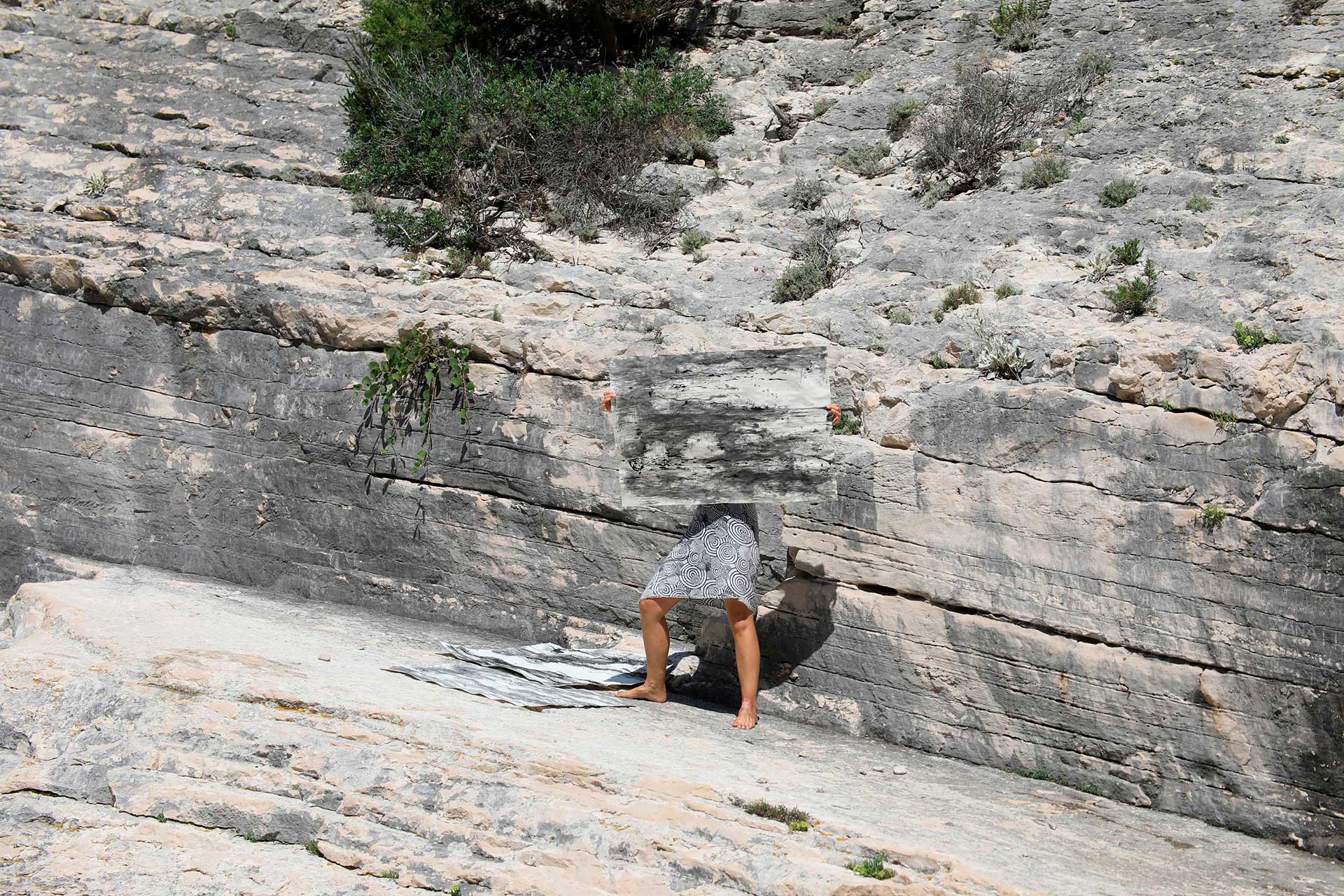
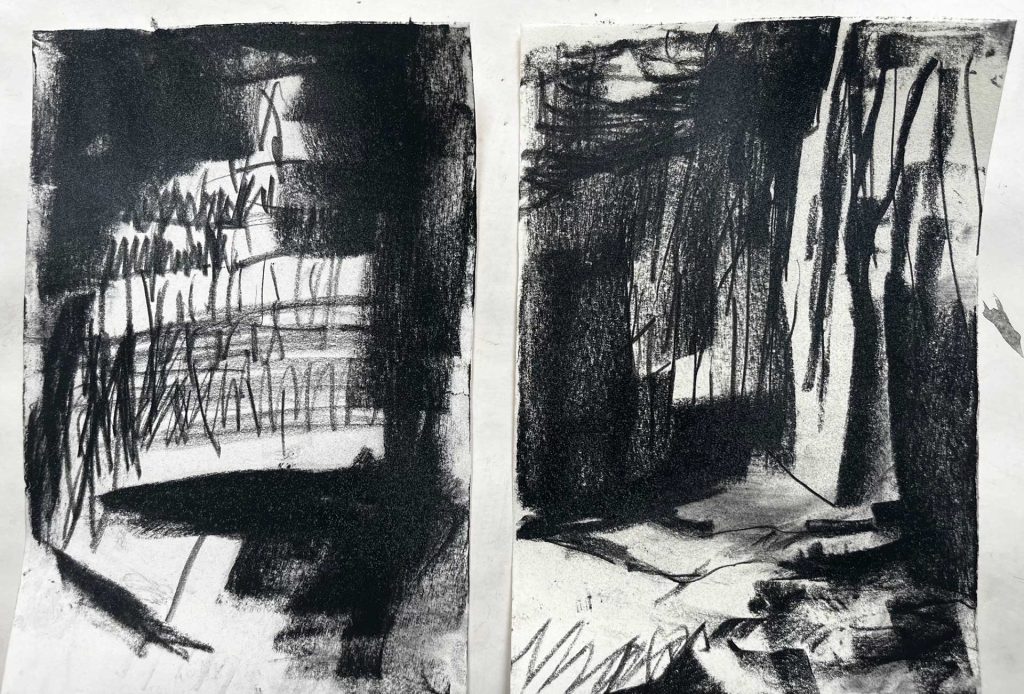
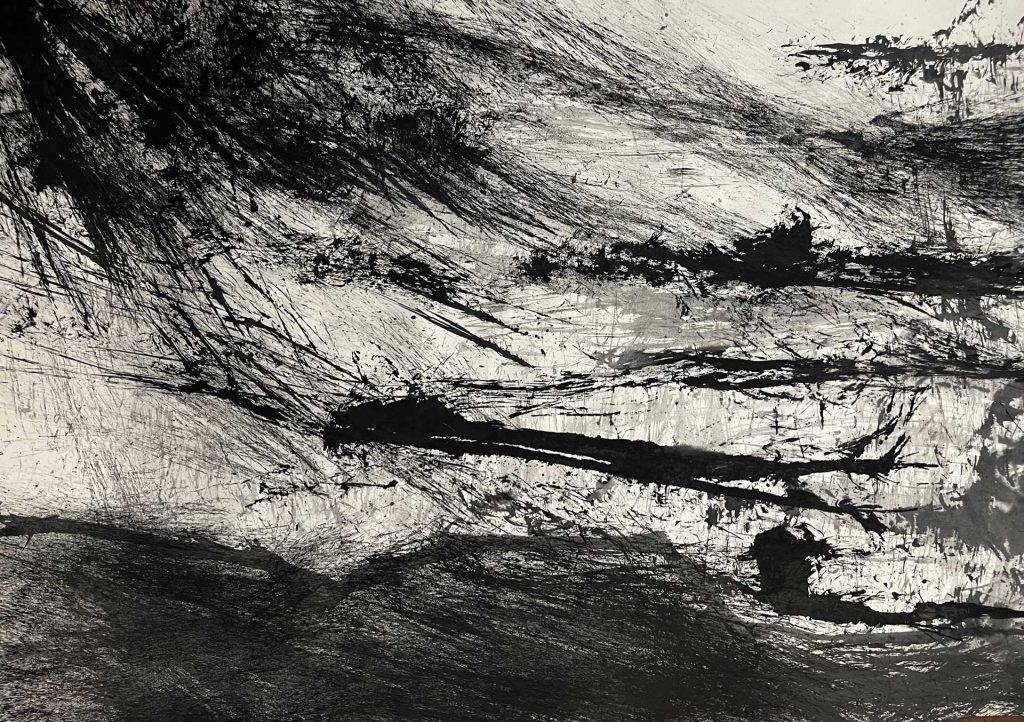
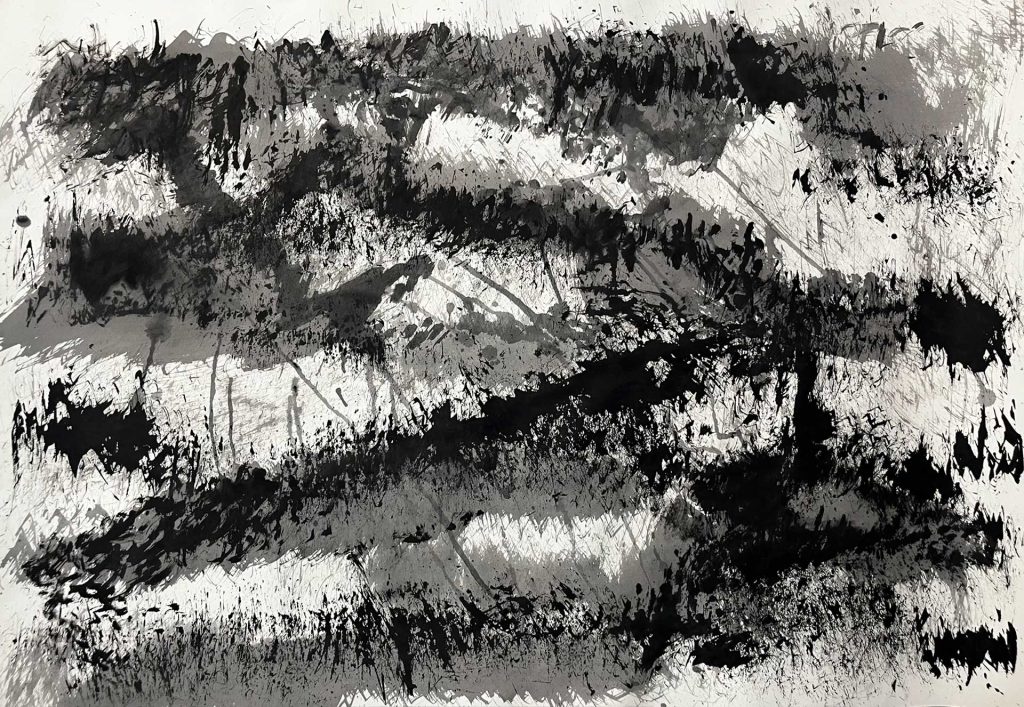
The project began with field research at four key geological sites across the island: Srebrna Bay, Vini bok Bay, Mala Pritišćina Bay and Kupinovac Beach. At some locations, Alma made some of the ink sketches directly inspired by the patterns and rhythms of her surroundings. More sketches, both in ink and charcoal, were created later, while the image of the stone texture was still ingrained in the artist’s memory. The process resulted in four abstract paintings that capture the geology of Vis—each brushstroke reflecting the spirit, energy and history of the places she visited.
THE TOOLS
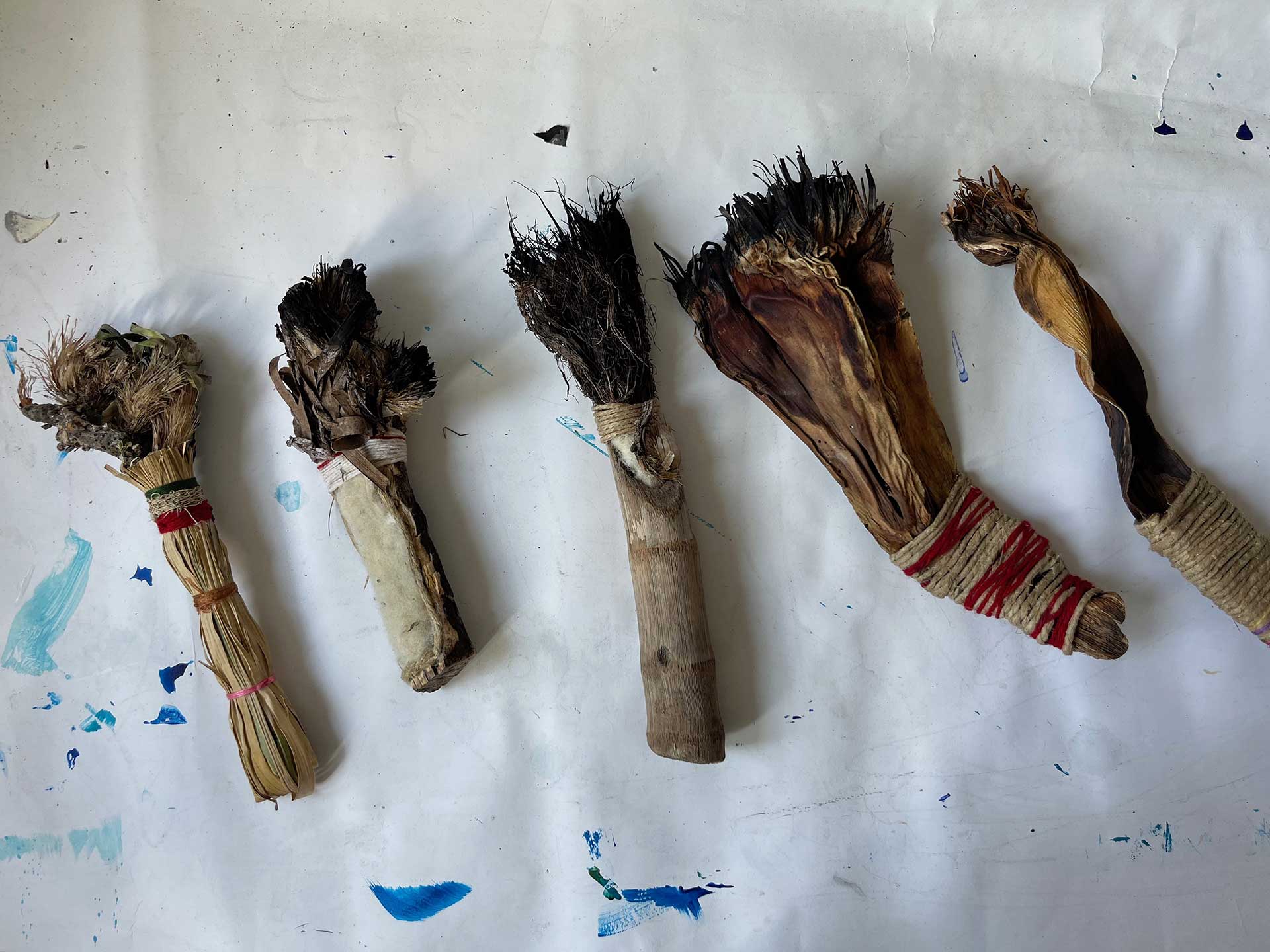
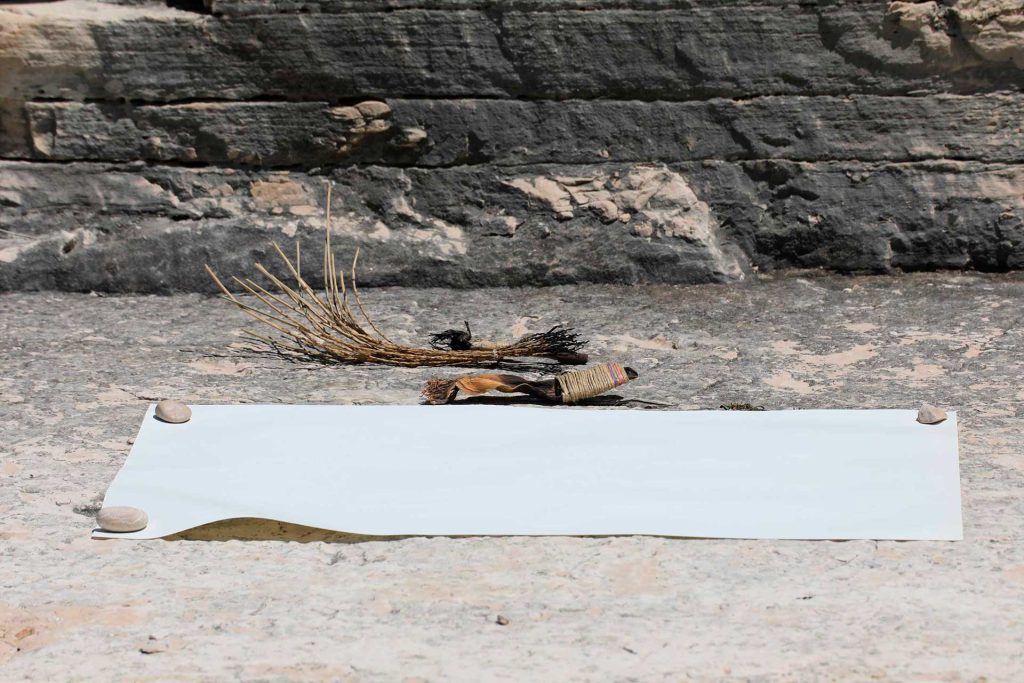
Alma gathered most of the materials for her brushes directly from the landscapes she painted. The bristles are made from two plant species deeply embedded in the ecology of the Vis archipelago, each offering distinct tactile qualities. One of them, Posidonia oceanica, the ancient seagrass that carpets roughly 1,171 hectares of the seabed around Vis, has grown in these waters for centuries and provided fibrous, salt-infused material with a texture no manufactured brush could replicate. The other, Agave americana, widely present along the rocky Dalmatian coast, contributes strong, resilient fibres—of the same type once used by Benedictine nuns on nearby Hvar for lace-making—producing bold, expressive marks on paper and canvas. Alma also incorporated fibres from palm and date palm leaves (Phoenix canariensis), whose leaves are valued for their durable fibrous structure and distinctive linear texture, qualities that lend a softer, more gestural character to brushstrokes.
THE LOCATIONS
You can follow Alma’s journey on the island’s interactive map, which traces the path from the bays and beaches she visited to the brushstrokes of her final paintings. Each location brings together photographs of the landscape, the artist and the sketches created on the spot and those that were made afterwards, as well as the finished artworks. Time-lapse videos of the works in progress and short accompanying texts offer further insight into the connection between the natural environment and her artistic inspiration.
Explore Alma’s artworks and the locations that inspired them on the map below and see how the karst landscapes of Vis gradually transform into abstraction.
SREBRNA BAY
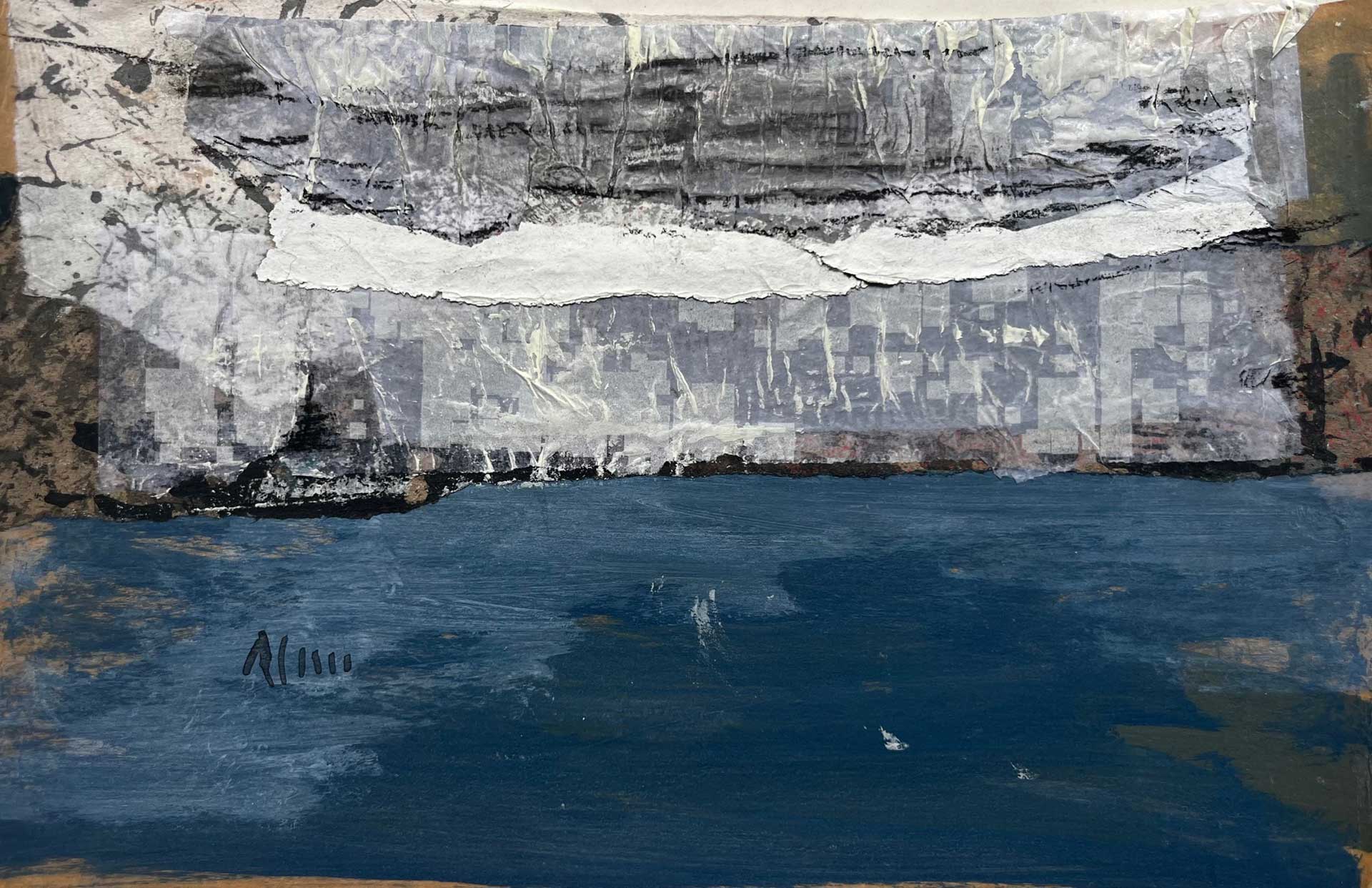
Srebrna Bay opens a window into deep geological time, where layers of white rudist limestones, formed around 90 million years ago, bear witness to an ancient marine world. The site was also once the location of an ancient quarry, where stone was extracted to build the city of Issa (today Vis).
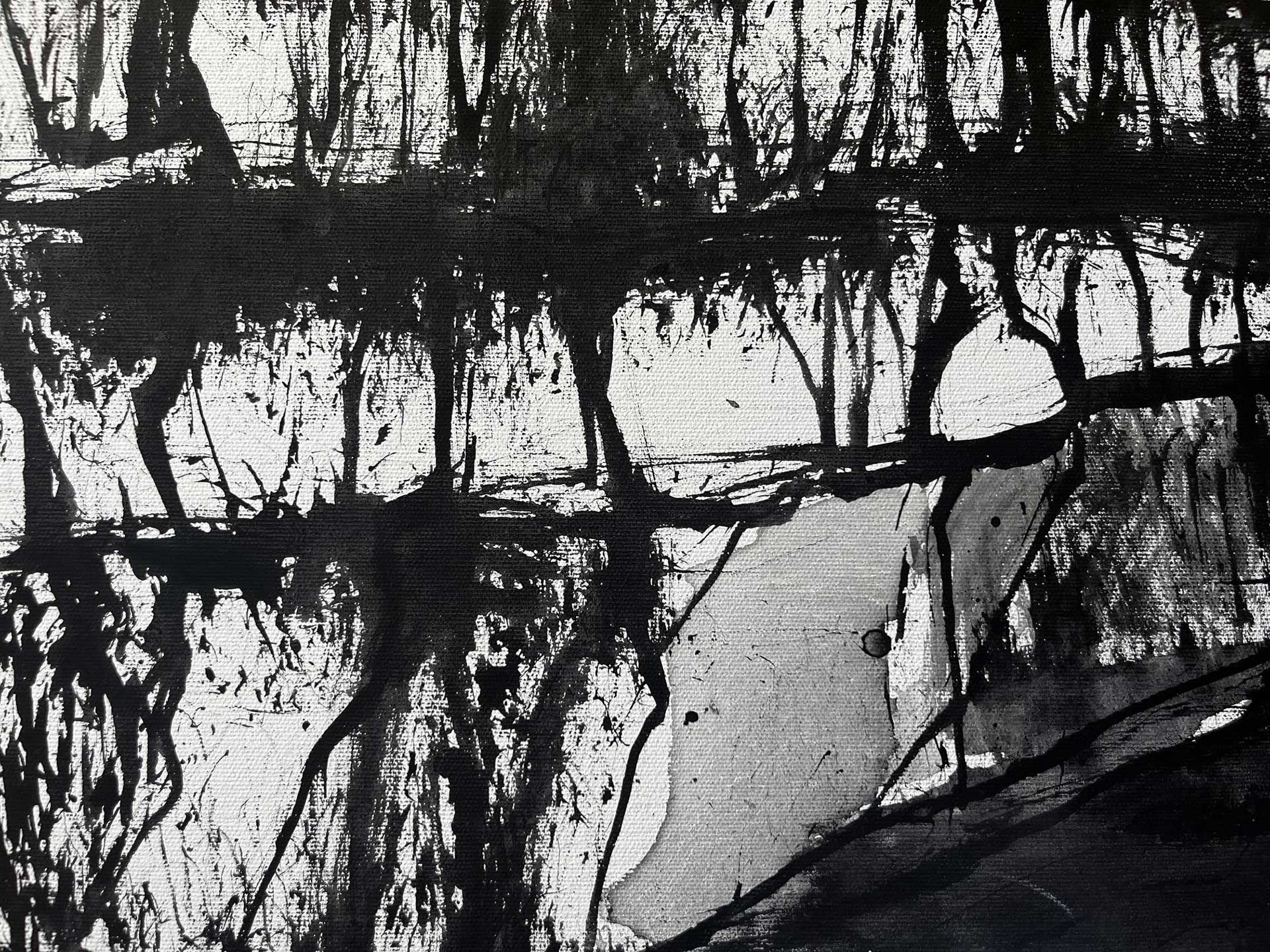
Alma translates the texture of the Srebrna Bay limestone into painterly language through relief-like, almost tactile strokes, where rhythm and density evoke the layered nature of rock. The stone itself appears fragmented and fissured—and this sense of fragmentation becomes visible in her work through interrupted marks, fractured surfaces, and shifting painterly structures. Both the sketch and the final piece can be read as a contemporary interpretation of the materiality of landscape: a shift from representation to experience, where the painting does not simply depict nature, but re-materializes it through gesture, trace, and the physical memory of stone.
VINI BOK BAY
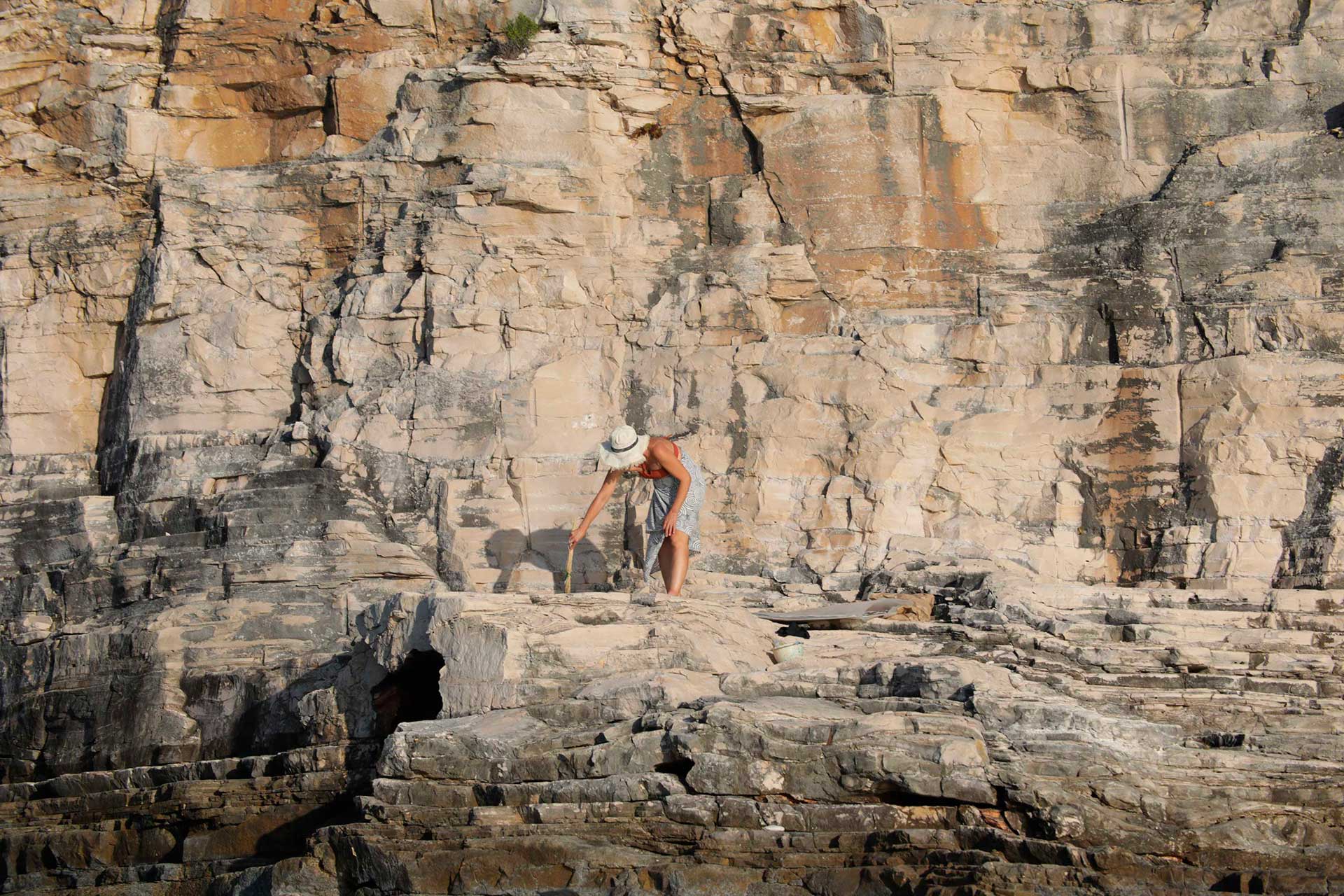
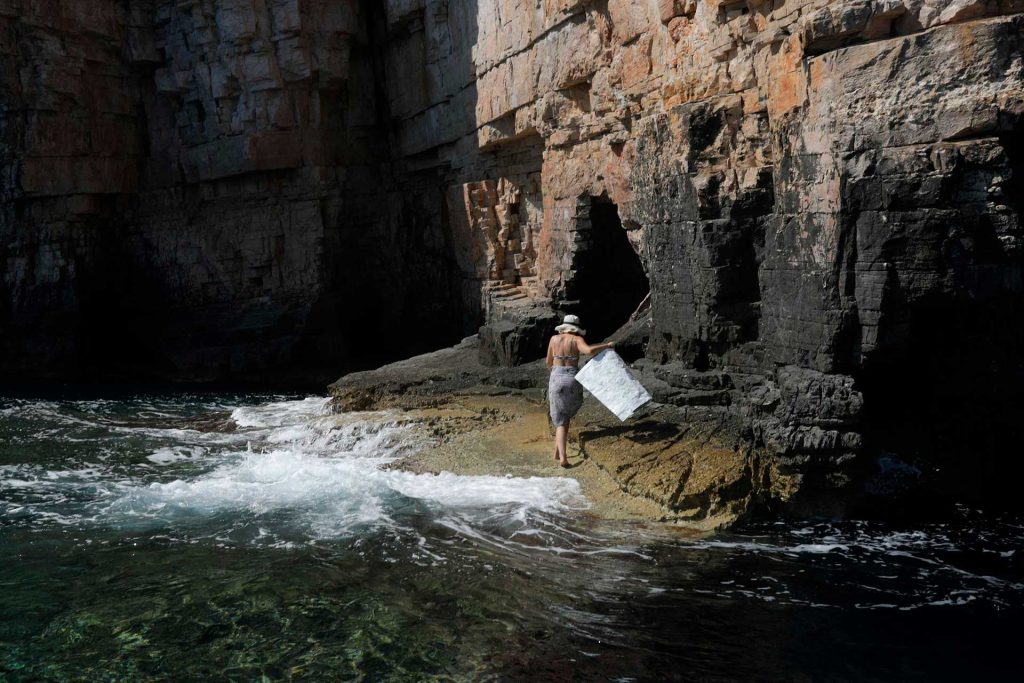
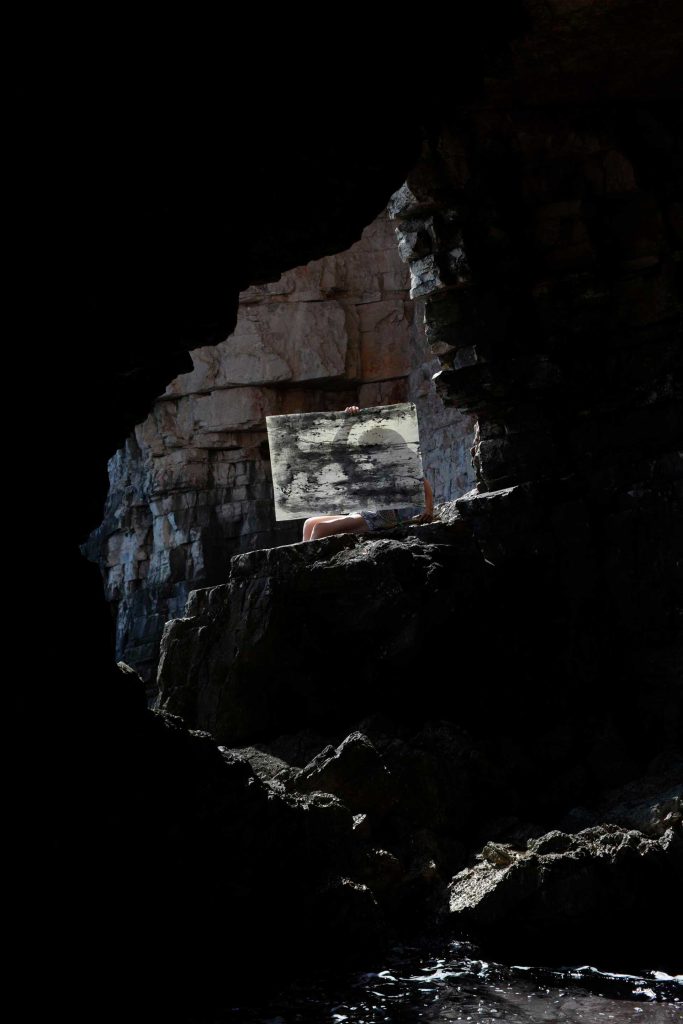
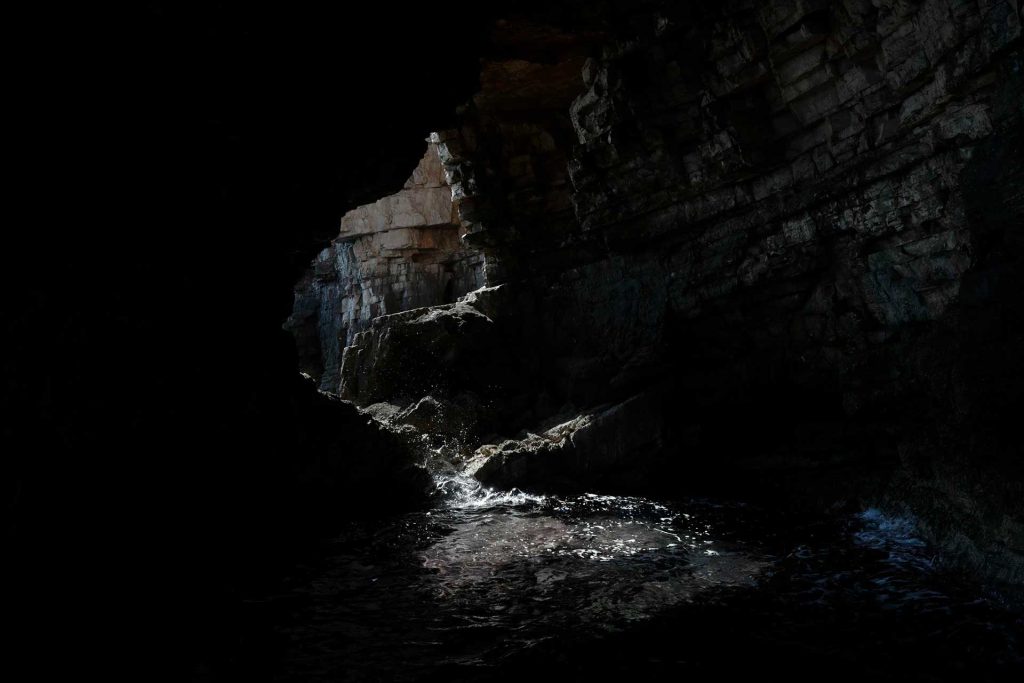
Vini bok Bay shelters a sea cave carved into the limestone. The cave’s arched opening frames the rock face beyond like a window into the island’s geological interior, where horizontal layers of limestone record millions of years of sediment laid down on an ancient seabed. The walls bear the characteristic texture of karst—eroded and darkened by salt and moisture near the waterline. It is a place defined by thresholds: between light and shadow, between land and sea, between the solid permanence of stone and the restless movement of water below.
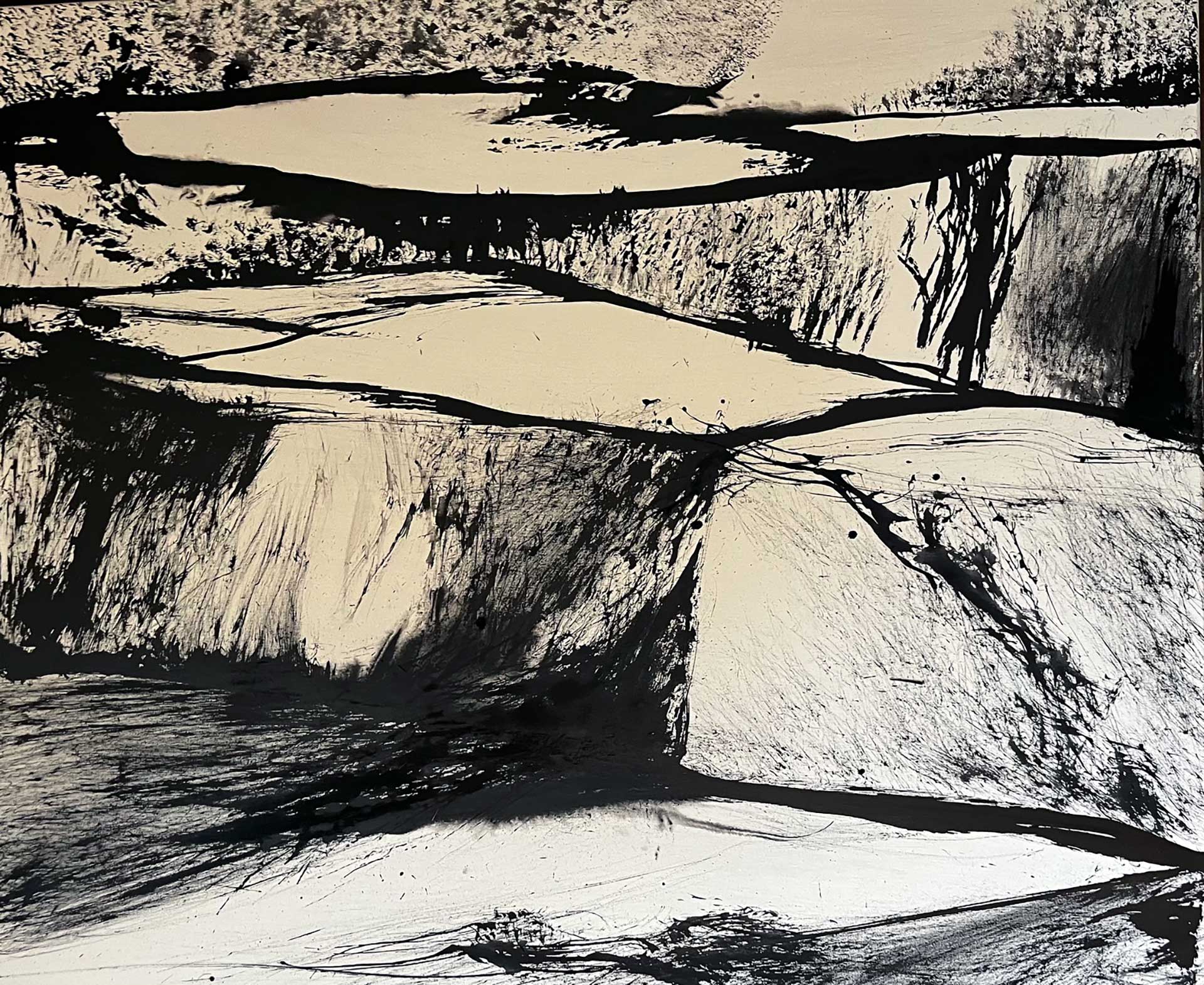
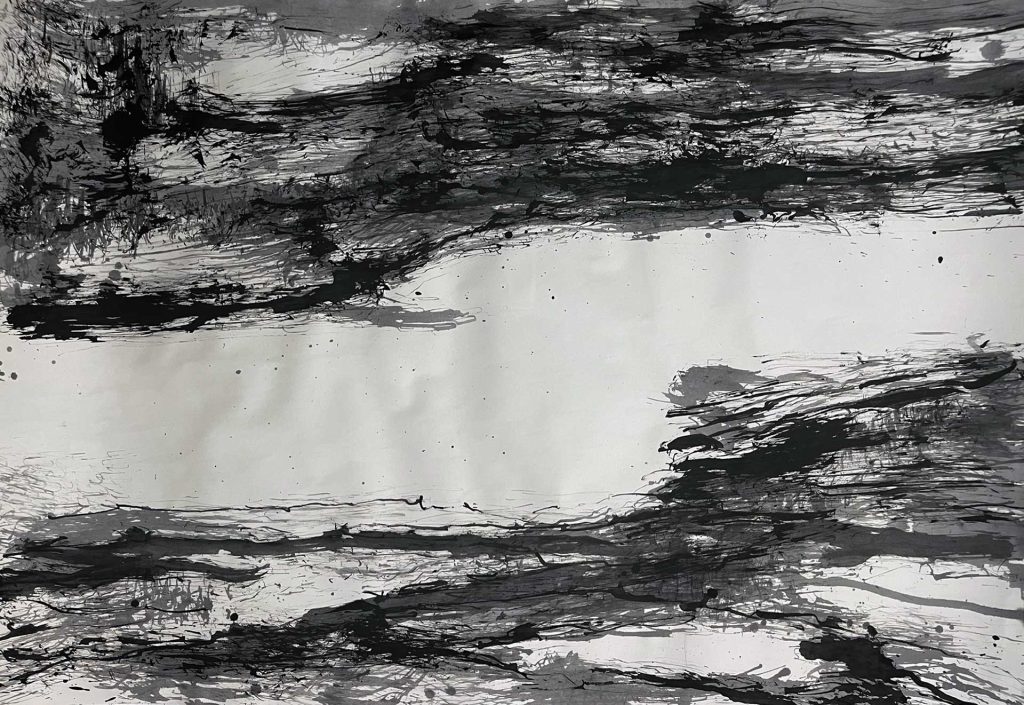
Alma allowed this atmosphere of tension and contrast to guide the language of her ink marks. Her painting absorbs the cave’s essential qualities: the stark opposition of interior darkness against luminous stone, the curved pressure of the arch, and the fractured, layered rhythm of the cave walls. Where the cave records time slowly through sedimentation, erosion, and fragmentation, the painting distills it into gesture.
mala pritišćina bay
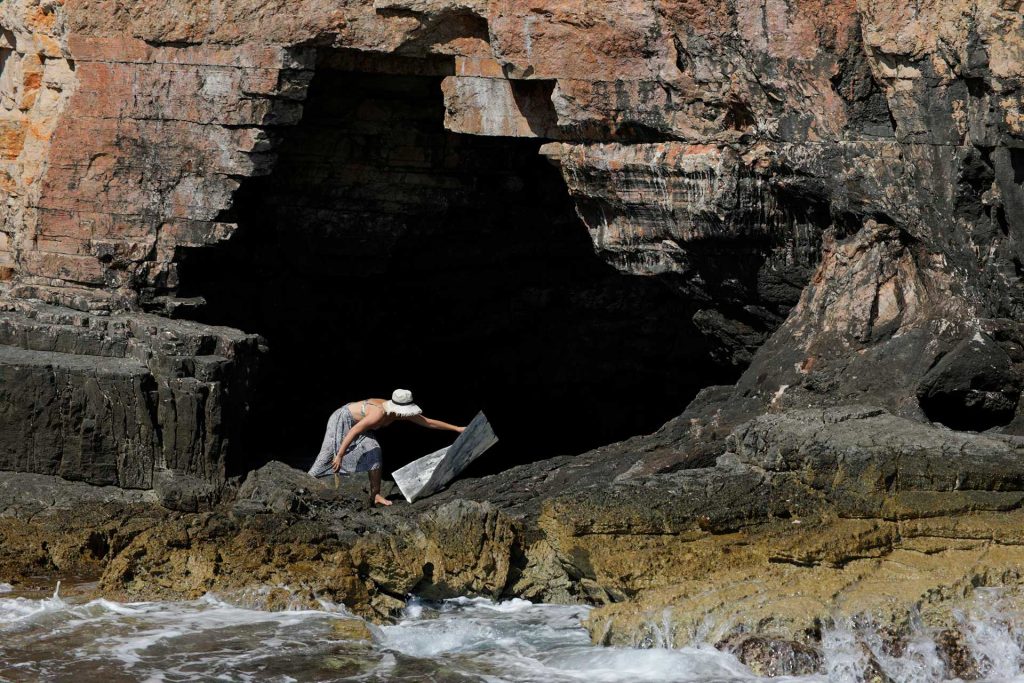
Mala Pritišćina is the kind of place that is not easy to find. Accessible only by sea, this secluded inner bay folds into the coastline like a hidden chamber—protected from waves, noise, and everything beyond the quiet murmuring of water against the rocks. The formations of the steep limestone walls appear dense and compressed, fractured into long planar layers that descend toward the water with almost architectural precision. At the water’s edge, a small pebble beach marks the threshold, still and unhurried.
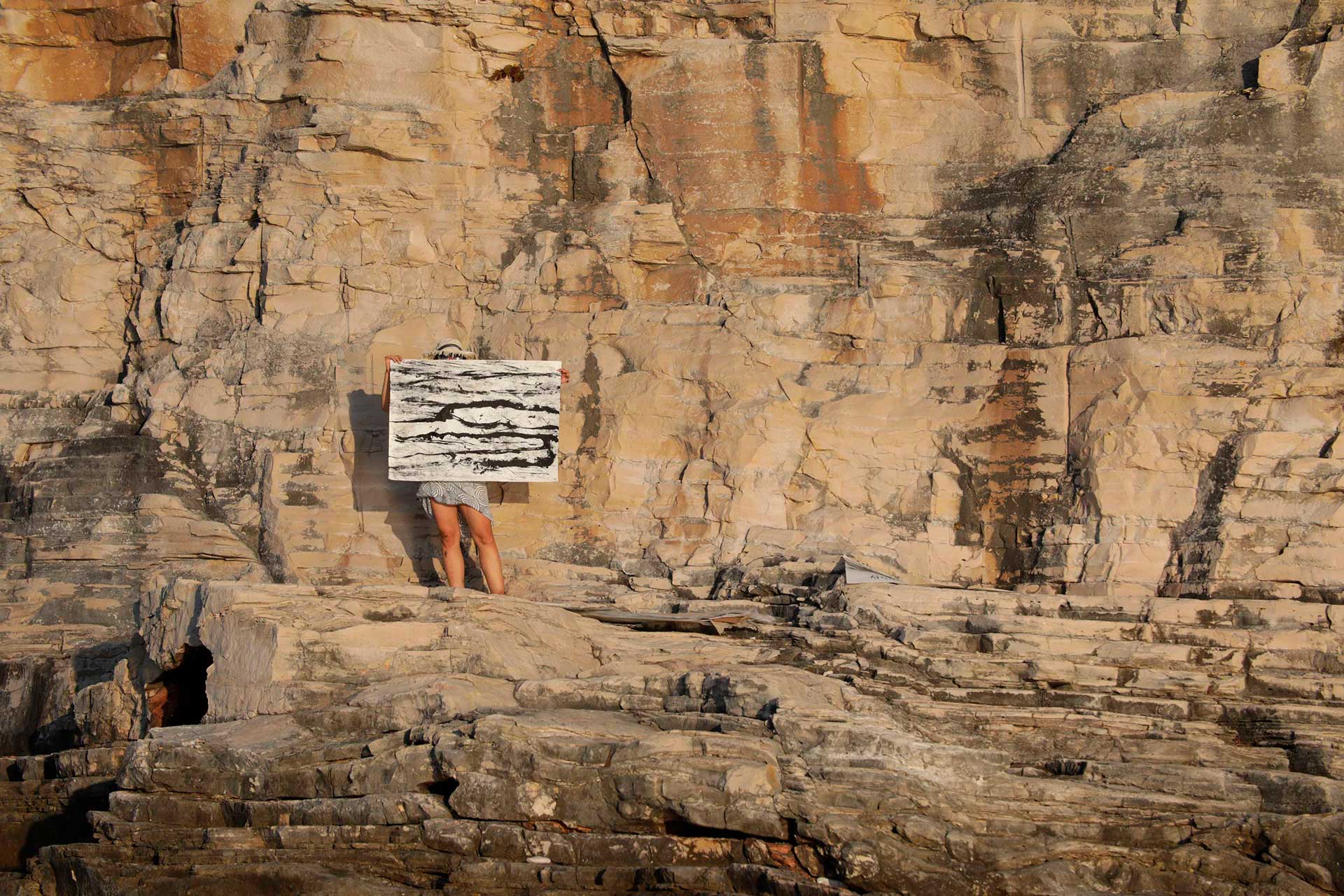
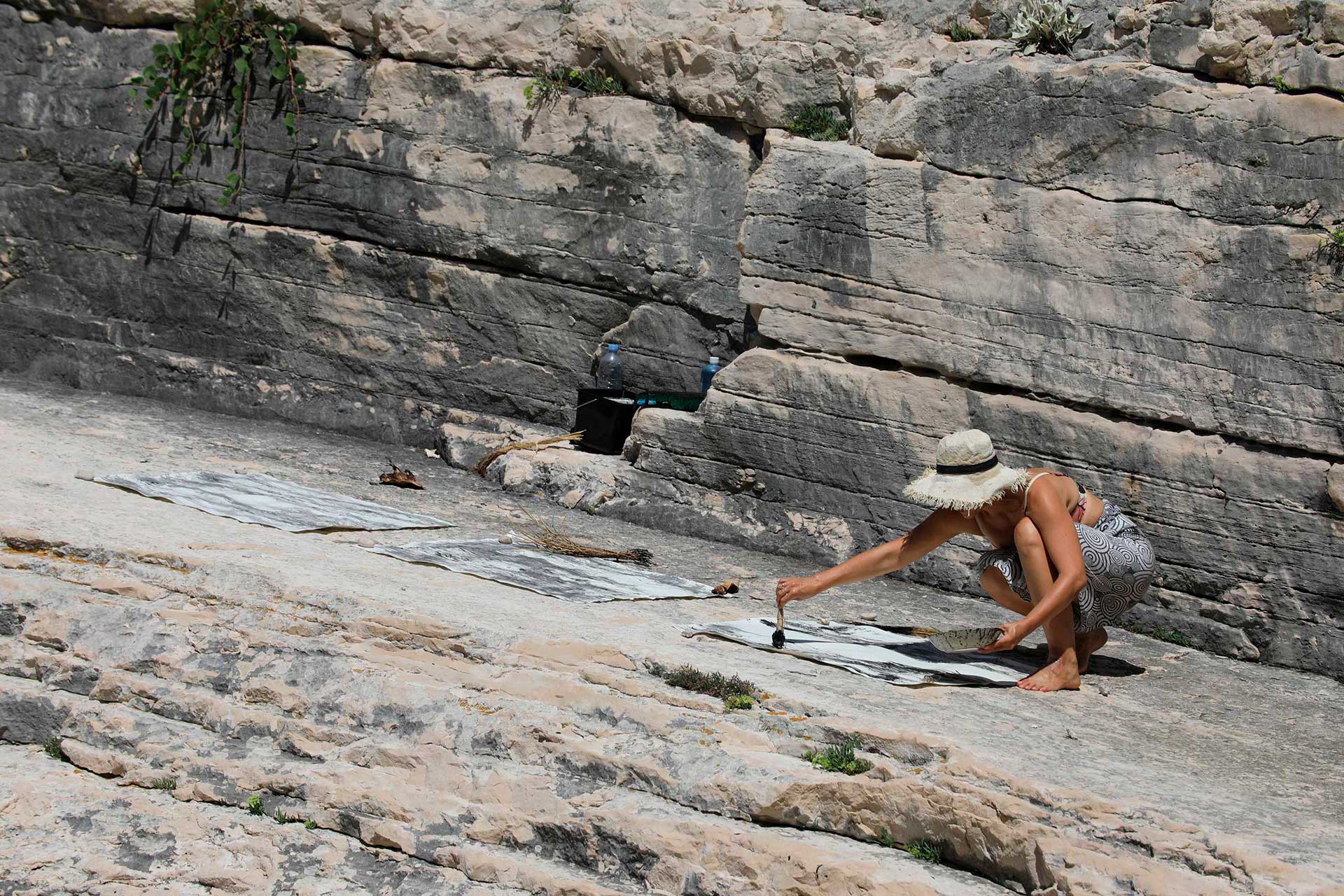
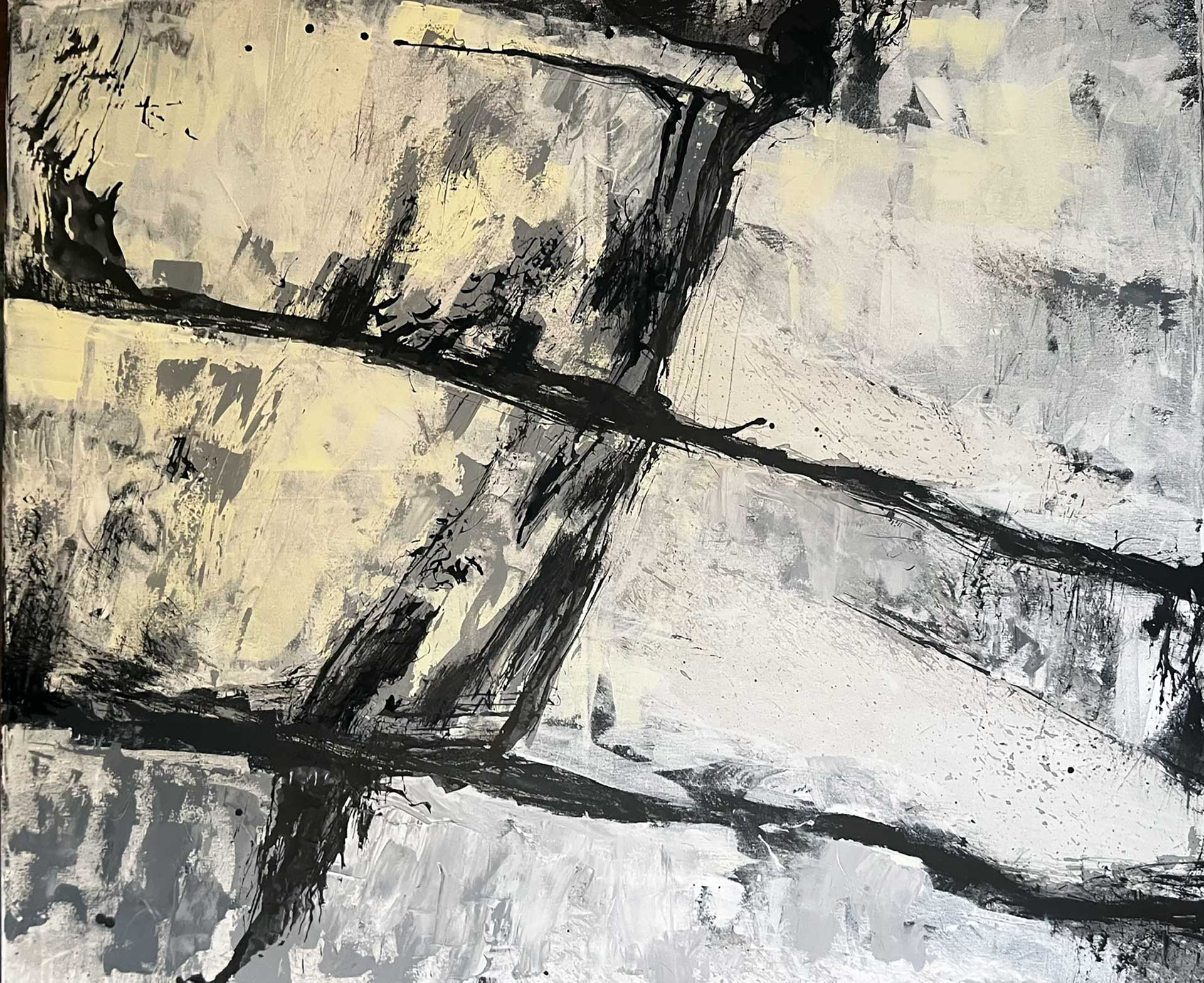
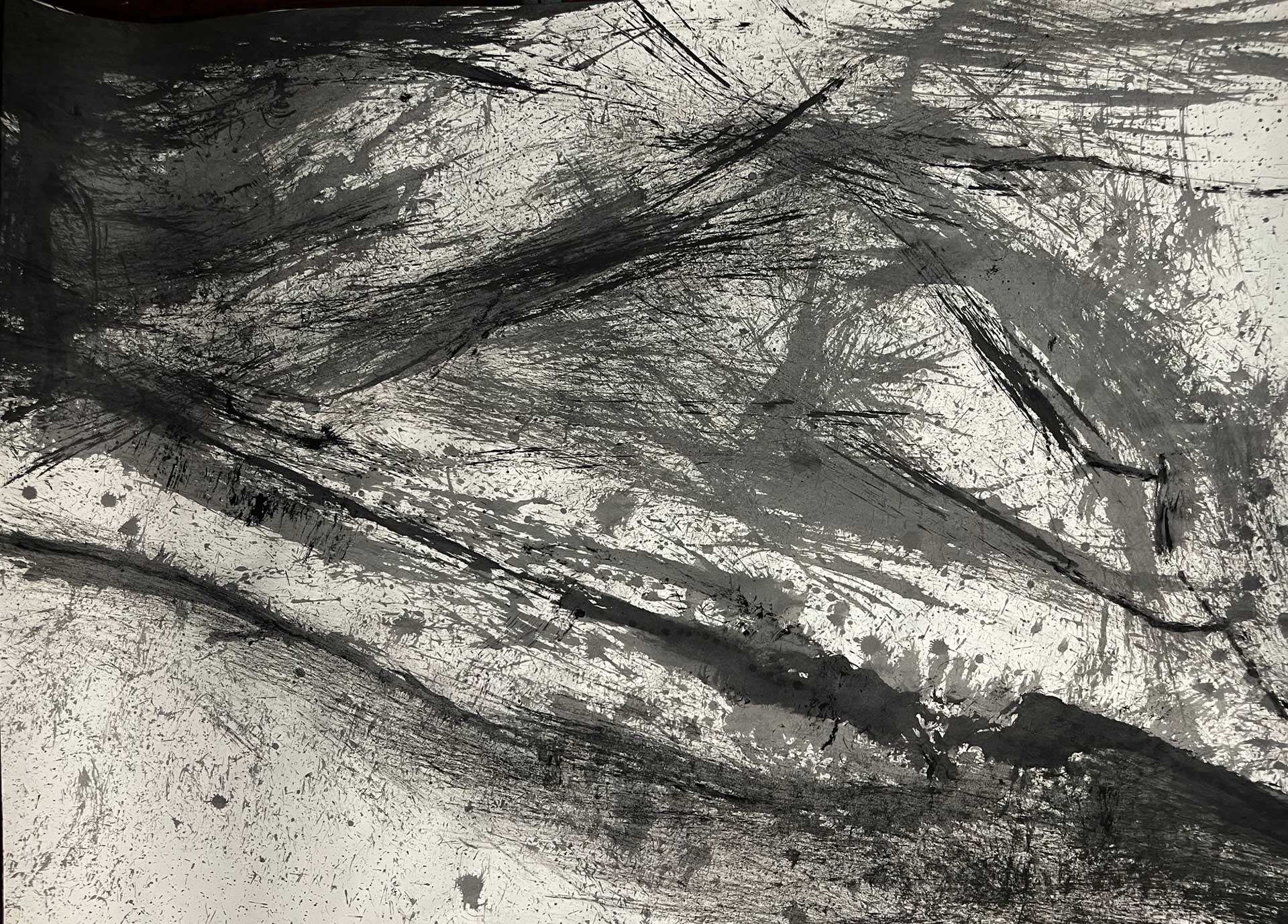
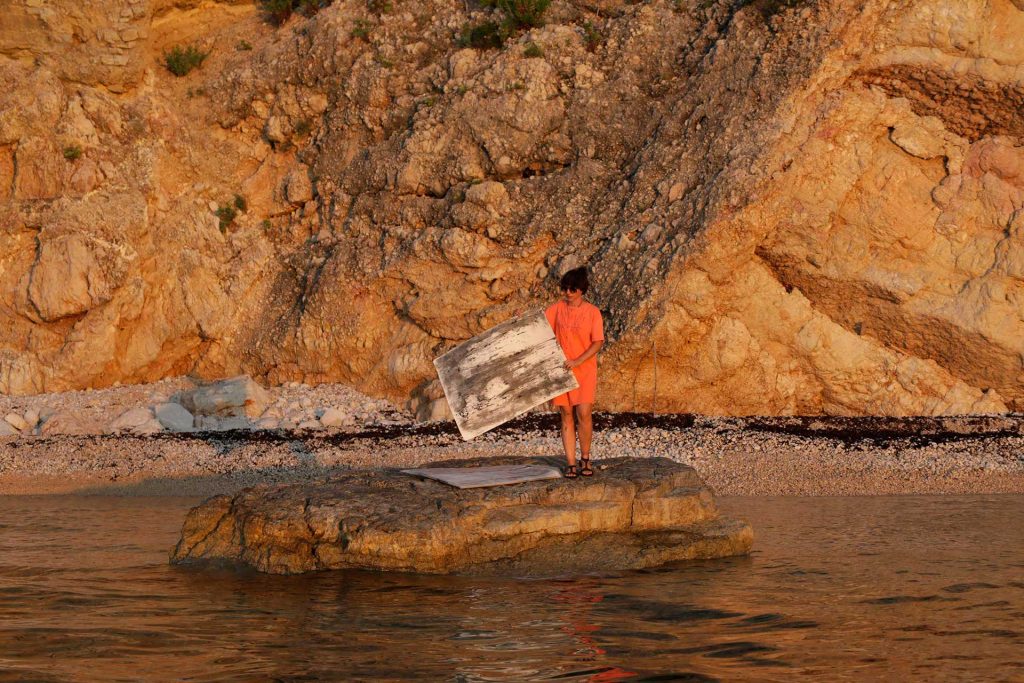
It is these planar layered formations that surface in Alma’s work here. The horizontal strata of the cliffs unfold like accumulated traces of geological time, each plane carrying its own texture, fracture, and direction. Barefoot against the stone, Alma lifts her work toward the rock face as though placing it into alignment with the landscape itself, at first glance almost camouflaged within it. The final painting absorbs the essential quality of the site: its sedimented rock formations, their density, and the gradual movement of layers descending toward the sea.
KUPINOVAC BEACH
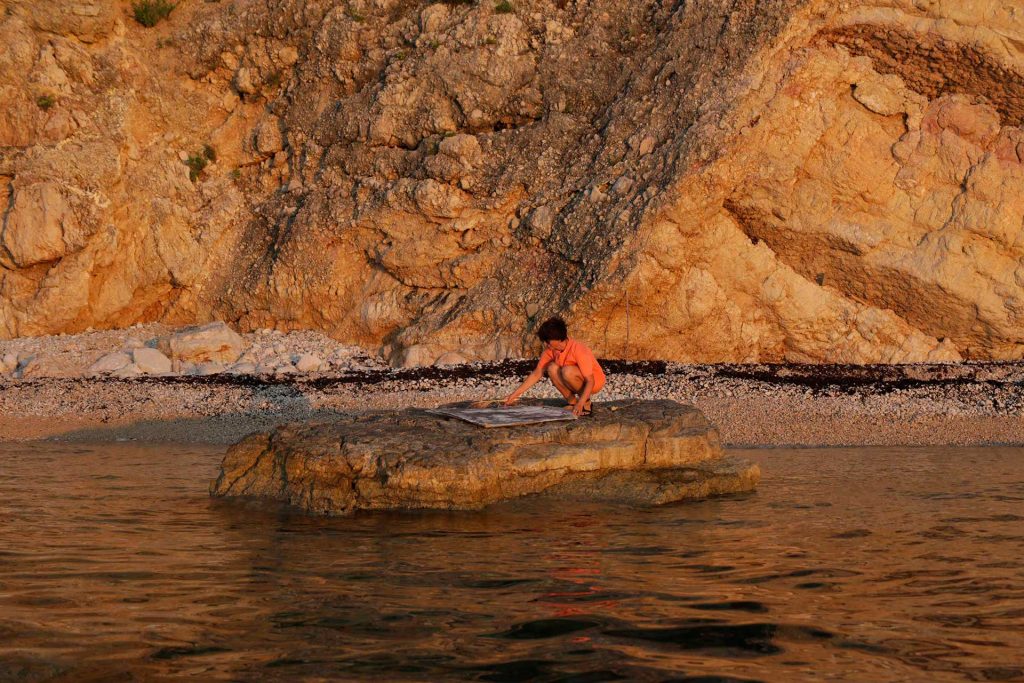
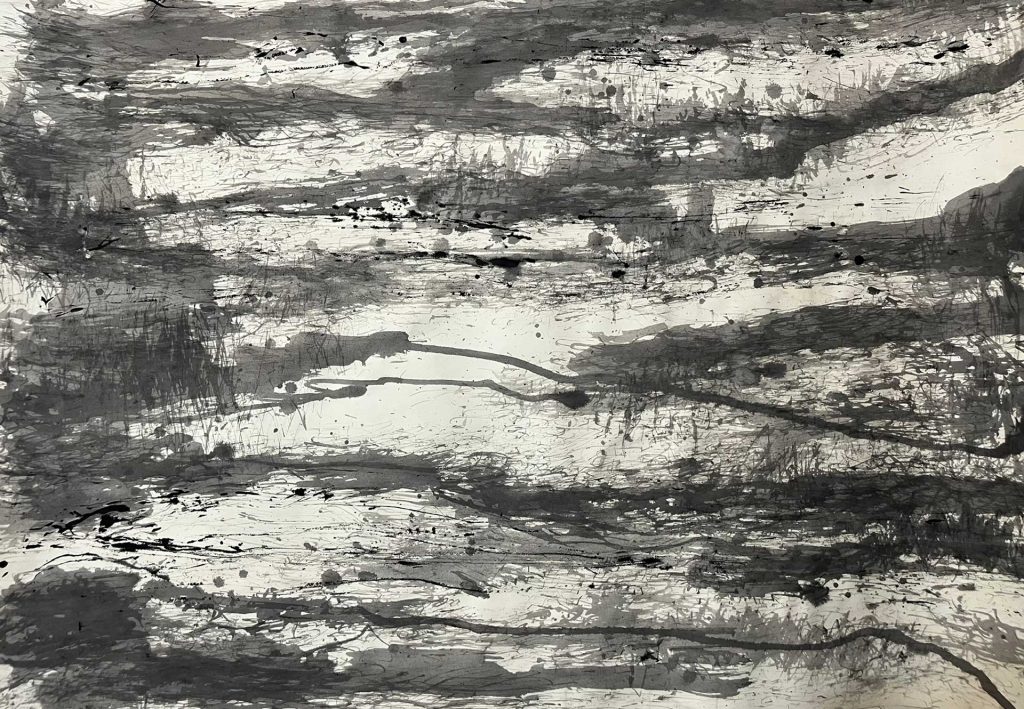
The people of Komiža will often tell you that this is the most beautiful beach on the island. It is defined by white pebbles shaped like ostrich eggs, a sea cave, and a broad stone plateau extending before the shore, almost theatrical in its presence; locals still tell stories that Greta Garbo used to sunbathe on that rock. Unlike the previous southern bays dominated by Upper Cretaceous limestones, Kupinovac exposes older Lower Cretaceous carbonate formations composed of limestones and calcitic dolomites. These rocks weather into sharply stratified, granular surfaces whose compressed sedimentary bands remain visibly preserved within the stone. Rather than the smooth dissolved surfaces often associated with mature karst, Kupinovac reveals a rougher and more fractured geological texture shaped by both sedimentation and long-term coastal erosion.
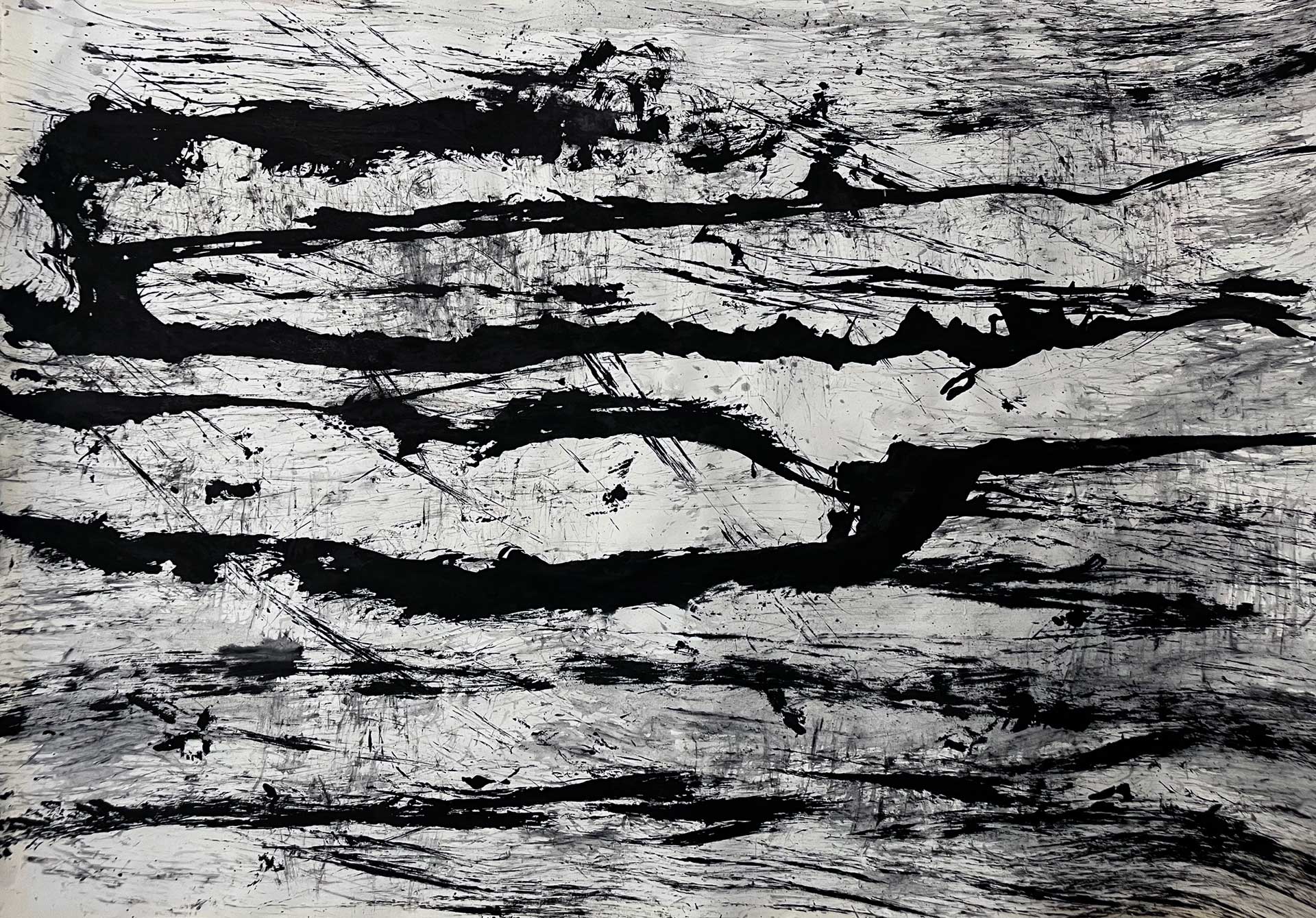
That sedimentary logic surfaces directly in Alma’s paintings. The horizontal banding that moves through her work—dense black masses alternating with open white—acts as a structural memory. The marks accumulate the way rock does: not in a single gesture, but in strata. The raw, granular texture of Kupinovac’s limestone, rough and complex, finds its counterpart in Alma’s brushwork that resists refinement.
SOURCES
Božanić, J., & Fiamengo, B. (Eds.). (n.d.). Geopark Vis Archipelago. Nautic Center Komiža d.o.o. Retrieved May 26, 2026, from https://www.vis-tourism.com/hr/multimedija/brosure/
Grgurević, D. (2007). Palms in Adriatic parks. Šumarski list, 131(7–8), 353–362. https://hrcak.srce.hr/22117
Krklec, K., Lozić, S., Šiljeg, A., Perica, D., & Šiljeg, S. (2015). Morphogenesis of karst poljes on Vis Island, Croatia. Journal of Central European Agriculture, 16(2), 99–116. https://doi.org/10.5513/JCEA01/16.2.1595
Lozić, S., Krklec, K., & Perica, D. (2012). Typology of Vis Island based on influence of geological, geomorphological and pedological characteristics on natural and cultural landscape. Naše more, 59(1–2), 82–91.